OUR GREAT MINDS
OUR GREAT MINDS
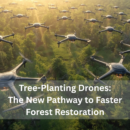
Imagine a future where forests can grow back faster than before — not just by people planting one tree at a time, but with swarms of flying robots helping nature heal itself. That future is starting to arrive, and it’s powered by tree-planting drones: autonomous machines that can plant seeds in places people can’t easily reach.
This isn’t science fiction. It’s real technology today, and it’s shining a spotlight on something cool and powerful — the way humans and machines can team up to fix the planet.
Tree-planting drones are special flying robots programmed to drop seeds (in little pods) into soil where forests have been damaged or destroyed. These drones don’t just fly around randomly — they are guided by smart computers and maps that find the best places to plant.
Instead of people planting seedlings by hand, these drones can release thousands of seeds in a single day. They can fly over rough or dangerous ground where humans might struggle, like burned forest hillsides, flood damage zones, or areas too steep to walk.
Here’s how the process usually goes:
Traditional tree planting can be slow and expensive. A team of workers might plant a few hundred trees a day. A drone can do thousands in the same time — speeding up recovery after wildfires or mining damage.
There are places that are unsafe or almost impossible for people to plant trees — cliffsides, flooded valleys, or thick brush areas. Drones can access these spots without risk.
The seed pods come with built-in nutrients and protective layers that help seeds survive tough conditions. This means higher success rates for new forests — not just more seeds dropped.
While the drones themselves aren’t cheap yet, over time they could reduce the money needed for planting and replanting forests. Less cost can mean more trees.
Here’s what makes tree-planting drones exciting:
It’s important to understand that tree-planting drones aren’t yet everywhere. They’re still being tested and improved. Right now, companies and research groups in places like Australia and other parts of the world are working on making them better and more effective.
This means:
So while drones won’t replace humans in all reforestation work, they are a powerful new tool that could play a major role in how we save and rebuild forests in the future.
Tree-planting drones show how technology and nature can work together. They don’t do the whole job alone — forests still need water, care, and long-term planning — but drones can help give nature a powerful head start.
It’s technology that doesn’t just entertain or connect us — it gives back to the Earth.
And that’s something worth watching.
Sources
AirSeed Technologies – Official website explaining their AI-powered drone planting system and biodegradable seed pods
Australian Broadcasting Corporation (ABC News) – Coverage of large drones planting up to 40,000 seed pods per day
Euronews – Article on Australian drone reforestation startup using seed pods and automation
Create Digital – Report on AI and drone technology in reforestation
Greening Australia – Discussion on drone seeding and ecological restoration planning
#TreePlantingDrones #Reforestation #ClimateInnovation #EmergingTechnology #EnvironmentalTech #SustainableFuture #Biodiversity #CleanTech #GreenTechnology #ClimateAction
Did you enjoy this article?
You May Also Enjoy...
 Ultra-Thin Solar: The Crystal “Sandwich” Technology That Could Power the Future
 The Top 10 Energy Innovations Changing the World Right Now — What the Next 5 Years Could Look Like
 Tina Olivero, “What if Newfoundland was more like Norway?”
 TechRev Innovator Award Winner – Packers Plus
 Clariant and Air Liquide Present MegaZone: Novel Catalyst layering tecnology