OUR GREAT MINDS
OUR GREAT MINDS
There are moments in time when opportunity is scattered, disconnected, and difficult to see. And then there are moments when patterns begin to form—when multiple industries, technologies, and global shifts start pointing in the same direction.
Canada is in one of those moments now. What is emerging is not a single opportunity, but a network of them. Energy is evolving. Resources are being revalued. Technology is accelerating. And the global economy is quietly reorganizing around supply, security, and control. Most people will see these as separate conversations. They are not. They are connected.
Because the next phase of Canada’s economy will not be built on one sector alone. It will be built at the intersection of energy, resources, infrastructure, and intelligence. Those who understand how these pieces fit together will not just participate in the future. They will help shape it.
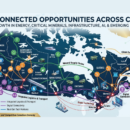
What follows is a map. A map of where momentum is building, where capital is moving, and where long-term opportunity is forming beneath the surface.
In energy and infrastructure, the shift is already underway. The conversation is no longer about choosing between old and new. It is about integration and expansion. From the evolution of oil into broader energy systems, to the rise of small modular reactors, hydrogen development, offshore wind, and battery storage, the direction is clear. Energy is becoming more diversified, more strategic, and more central to economic growth than ever before. At the same time, intelligence is entering the system. AI is beginning to manage grids, optimize performance, and reshape how energy is distributed and consumed. Even the most advanced concepts, like fusion and wireless transmission, are no longer theoretical discussions. They are part of a longer-term trajectory that will redefine how power moves.
Alongside this, resources are taking on new importance. Canada’s position in critical minerals is no longer just an economic advantage. It is a strategic one. Lithium, nickel, cobalt, rare earth elements—these are the materials that sit at the foundation of electrification, technology, and modern industry. But the real opportunity does not stop at extraction. It extends into processing, refinement, and manufacturing. The countries that control those stages will control the value. Gold is also re-emerging, not just as an asset, but as a signal of shifting global confidence. Mining, in all its forms, is moving from background industry to center stage.
Technology is accelerating this entire shift. Data centers are expanding rapidly, driven by AI and digital demand, and they are becoming some of the most energy-intensive assets in the modern economy. Infrastructure is getting smarter. Systems are becoming connected. The line between physical industry and digital intelligence is disappearing. At the same time, something unexpected is happening. After decades of outsourcing and offshoring, there is a return to building, making, and producing. Canada is beginning to reindustrialize. And with that comes a renewed demand for skilled trades, technical expertise, and hands-on capability.
Over all of this sits a broader strategic layer. Energy security is no longer a background issue. It is becoming a defining factor in global stability. The Arctic is gaining attention, not just for its resources, but for its positioning. Nations are thinking differently about supply chains, access, and resilience. And within that shift, there is a need for a different kind of thinking—one that moves beyond short-term decisions and into long-term positioning. This is where the idea of nation-building returns, not as a political slogan, but as an economic necessity.
There are also opportunities that remain underestimated. Water, for example, is often overlooked, yet it may become one of the most valuable resources in the coming decades. Waste is being reimagined as a source of energy and value rather than something to discard. Solar technology is evolving beyond traditional panels into integrated systems. Carbon is being reconsidered, not just as a problem, but as a material that can be captured and repurposed. Even within electrification, there is a deeper question emerging about who actually benefits and where the real value is created.
Taken together, these opportunities form a much larger picture. They point to a Canada that is not limited to one identity or one industry, but capable of leading across multiple fronts at once. A Canada that builds, produces, powers, and innovates. A Canada that understands the importance of control—not just over resources, but over the systems that turn those resources into value. But none of this happens automatically. It requires massive action.
The difference between regions and businesses that rise and those that fall behind will come down to timing, positioning, and the ability to see clearly before something becomes obvious to everyone else. By the time opportunity is widely recognized, it is often already crowded.
What follows is not just a list of topics. It is a structured view of where momentum is building across Canada’s economy. Each area represents a point of leverage—where industry, capital, and long-term demand are beginning to align.
| Category | Opportunity | Strategic Focus |
|---|---|---|
| Energy & Infrastructure | From Oil to Opportunity | Evolving traditional energy into integrated systems |
| Energy & Infrastructure | The Nuclear Comeback (SMRs) | Stable, scalable power for industry and remote regions |
| Energy & Infrastructure | Hydrogen Nation | Exportable energy and global fuel transition |
| Energy & Infrastructure | Offshore Wind Powerhouses | Atlantic Canada as a renewable energy hub |
| Energy & Infrastructure | Stored Power (Batteries) | Grid stability and energy control |
| Energy & Infrastructure | The Intelligent Grid | AI-driven energy optimization |
| Energy & Infrastructure | The Fusion Future | Long-term breakthrough in energy supply |
| Energy & Infrastructure | Power Without Wires | Rethinking transmission and distribution |
| Resources & Materials | Critical Minerals Rush | Foundation of electrification and technology |
| Resources & Materials | Battery Supply Chain War | Control of materials and manufacturing |
| Resources & Materials | From Resource to Refinement | Capturing value beyond extraction |
| Resources & Materials | Rare Earth Reality | Strategic materials dominance |
| Resources & Materials | Untapped Mining Potential | Expansion of domestic resource development |
| Resources & Materials | Gold as Strategy | Wealth preservation and geopolitical positioning |
| Technology & Industry | AI Infrastructure Boom | Data centers as energy-intensive assets |
| Technology & Industry | AI Meets Energy | Integration of intelligence and power systems |
| Technology & Industry | Smart Infrastructure | Connected, adaptive industrial systems |
| Technology & Industry | Reindustrialization of Canada | Return to building and manufacturing |
| Technology & Industry | The Talent Gap | Skilled trades as a critical economic driver |
| Global Strategy | Energy Security | Control of supply and national stability |
| Global Strategy | The Arctic Advantage | Resources, routes, and geopolitical leverage |
| Global Strategy | Nation Builder Thinking | Long-term strategic positioning |
| Global Strategy | The Bull Arm Effect | Infrastructure as an economic catalyst |
| Emerging Opportunities | Water Resources | Long-term value in clean water supply |
| Emerging Opportunities | Waste to Wealth | Converting waste into energy and revenue |
| Emerging Opportunities | Solar Evolution | Next-generation solar integration |
| Emerging Opportunities | Carbon as Opportunity | Capture, reuse, and industrial application |
| Emerging Opportunities | Electrification Economy | Who captures value in energy transition |
| Emerging Opportunities | Hydrogen vs Reality | What technologies actually scale |
| Emerging Opportunities | Atlantic Energy Gateway | Canada’s East Coast as global access point |
Did you enjoy this article?
You May Also Enjoy...
 Ultra-Thin Solar: The Crystal “Sandwich” Technology That Could Power the Future
 Tree-Planting Drones: The Future of Restoring Forests
 The Top 10 Energy Innovations Changing the World Right Now — What the Next 5 Years Could Look Like
 Yara & Enbridge to Develop & Construct Low-Carbon Blue Ammonia Project at Enbridge Ingleside Energy Center
 Clean Energy Continues to Decarbonize Transportation with New Fuel Contracts