OUR GREAT MINDS
OUR GREAT MINDS
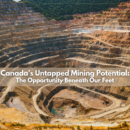
When you think about big ideas that will shape the future — like electric cars, renewable energy, smartphones, artificial intelligence, and even space tech — there’s one hidden fact most people don’t know: all of those technologies depend on special minerals buried deep in the earth. Canada happens to have tons of these minerals, but much of that potential hasn’t been fully tapped yet. That’s a huge opportunity both for the country and for the world.
“Critical minerals” are metals and elements that modern technology can’t do without. They are in electric vehicle (EV) batteries, wind turbines, solar panels, phone chips, medical devices, and even defense systems. Examples include lithium, nickel, cobalt, graphite, rare earth elements, and copper — stuff you rarely think about, but which make high-tech gadgets possible.
Canada recently updated its official list to include 34 critical minerals that it’s especially well-positioned to produce responsibly.
Canada already produces more than 60 different minerals. It’s one of the world’s leaders in potash and uranium and ranks high in nickel, aluminum, and other key metals. But that’s only part of the story.
Across provinces and territories — from Quebec and Ontario to the Northwest Territories — there are rich mineral deposits that have barely been explored or developed yet. Some regions, like the Ring of Fire in northern Ontario, contain large deposits of minerals like chromite, which are important for steel and aerospace materials but are still mostly undeveloped.
On top of that, mine tailings — the leftover waste from old mines — might themselves contain recoverable critical minerals worth billions of dollars, offering a new resource without digging fresh holes.
You might ask: Why should I care about mining if I don’t live near a drill site?
Here’s how it connects to your future:
• Electric cars and batteries: Minerals like lithium, nickel, and cobalt are needed for EV batteries. As the world shifts away from gasoline, demand for these will skyrocket.
• Cleaner energy: Wind turbines and solar panels use rare earth elements and other metals that are currently in short supply globally. Canada’s resources can help build a more sustainable grid.
• Tech devices: Your phone, laptop, and even future AI hardware need metals like graphite and gallium. Securing a steady supply means cheaper, more reliable technology.
• Jobs and economy: The mining and minerals industry supports hundreds of thousands of jobs and billions in economic activity. In fact, Canada’s critical minerals sector alone contributed about $40 billion to the economy and supported 110,000 jobs recently.
Global Demand Is Exploding
Worldwide demand for critical minerals is expected to double by 2040 — driven by EVs, renewable energy, and digital infrastructure. Canada’s huge reserves mean it could supply a significant portion of what the world needs.
More Money and Better Tech
The Canadian government has launched a Critical Minerals Strategy with billions in funding to accelerate exploration, mining, processing, and even recycling. This means new technology, better jobs, and faster development.
Cleaner Mining Methods
Canada is also pushing more environmentally responsible mining, with lower emissions and stronger social and governance standards than many other countries. That’s good news if you care about both jobs and the planet.
Recycling and Innovation
Old mine waste (called tailings) might become a new source of valuable materials — a rare example where solving an environmental problem also creates economic value.
In the next decade, Canada’s mining sector could help power:
• Your future electric car
• Affordable, reliable renewable energy
• High-speed tech gadgets
• Jobs, research opportunities, and university programs
Mining isn’t just digging holes — it’s about securing the building blocks of tomorrow’s technology.
Canada sits on a treasure trove of minerals that the world will need to build cars, clean energy, phones, computers, medical devices, and more. Much of this potential is still untapped, and recent government strategies are unlocking new investment and technology options. For someone entering the workforce, tech fields, energy careers, or even public policy — this is one of the fast-growing industries with real impact on everyday life.
Sources
• 🇨🇦 Government of Canada — Critical Minerals Strategy Progress Update
• 🇨🇦 Government of Canada — Advancing the Canadian Critical Minerals Strategy
• 🇨🇦 Government of Canada — The Canadian Critical Minerals Strategy (Overview)
• 🇨🇦 Canadian Critical Minerals Strategy – Annual Report 2024
• Reuters — Canada to accelerate critical mineral projects worth $4.6 billion
• Reuters — Rio Tinto funding for a gallium critical mineral R&D project
#CriticalMinerals #MiningInnovation #FutureTechnology #CleanEnergy #ElectricVehicles #SustainableMining #CanadaMining #ResourceEconomy #GreenTechnology #EmergingTech
Did you enjoy this article?
You May Also Enjoy...
 Canada’s Critical Minerals Rush: The Race for Lithium, Nickel, and Cobalt
 The Rare Earth Reality: Why the World Depends on a Handful of Mines — and What Comes Next
 Stopping Corrosion in Mine, Quarry, and Aggregate Processing Structures
 Norway’s Bold Move: Pioneering Deep Sea Mining for a Green Tomorrow
 Strengthening Global Electric Vehicle Supply Chains with Canadian Resources